Patents
1935 - US2143214A - Production of images
by Paul Selenyi, Egyesilt Izzólámpa és Villamossági rt. (United Incandescent Lamp and Electricity Co.)
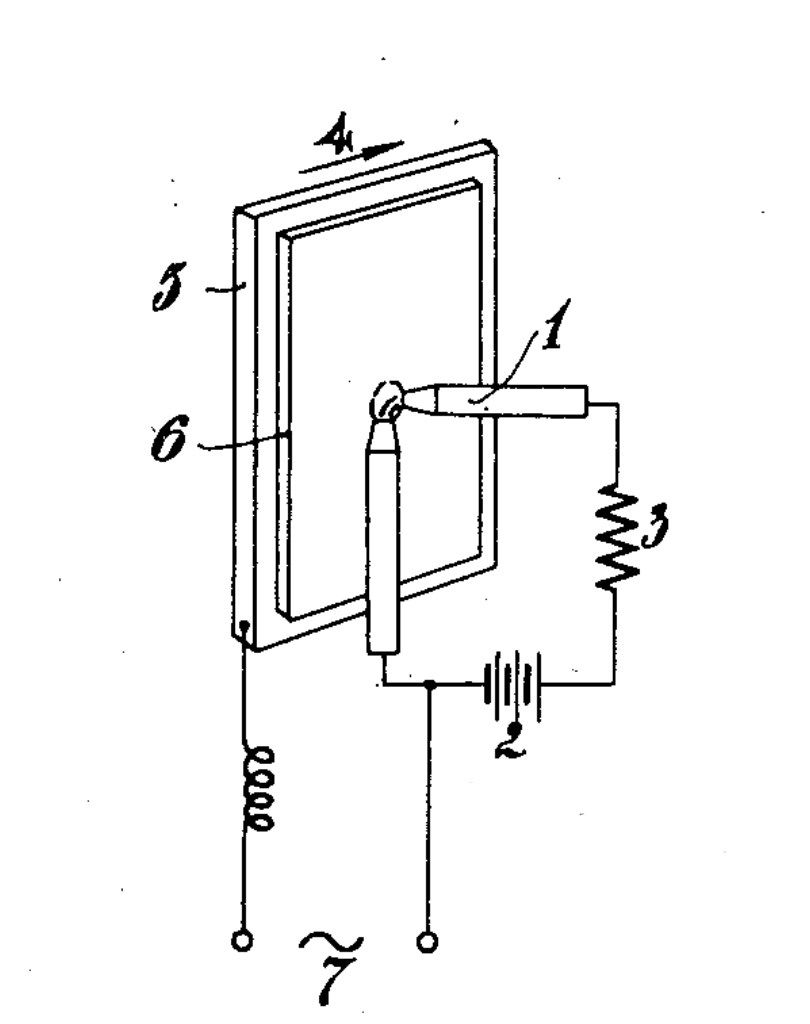 Charging process - electric arc
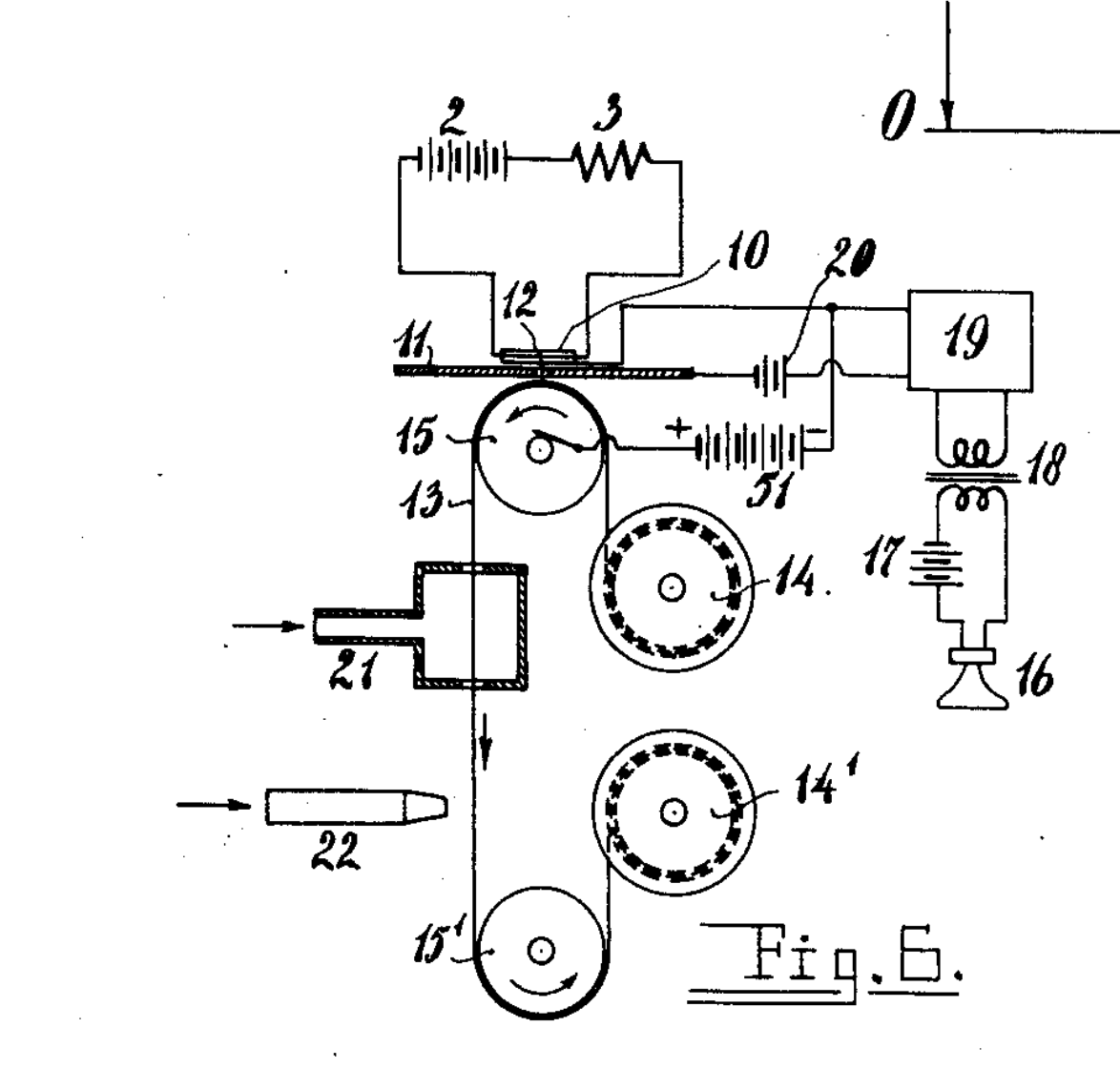 Charging process - ion beam with hot cathode - grid - anode system
The patent describes a method and apparatus — what Selényi calls electrography — for recording or reproducing images and signals by means of electric charge rather than light or mechanical styli. A source of gaseous ions (in the simplest form an electric arc, and in the improved form a heated alkaline-earth-oxide-coated thermionic cathode with a control grid, operating much like a vacuum tube on space-charge current at gas pressures anywhere from ~0.001 mm Hg up to atmospheric) directs a beam of ions toward a metal plate.
Interposed in the beam is a moving insulating receiving surface (a hard-rubber sheet, membrane, or film ribbon) that intercepts and stores the ions as a pattern of electrostatic charge. By modulating the beam's intensity in step with the electrical signal to be recorded — and moving the surface relative to the beam — a latent electrostatic image is written onto the insulator, which is then made visible by dusting it with an electroscopic powder (e.g., sulfur and minium) and optionally fixed with a transparent binder such as shellac or nitrocellulose lacquer, or wiped clean for reuse.
Selényi presents the technique as broadly applicable to anything convertible into a varying voltage or magnetic force — from measuring electric currents and recording oscillograms to printing facsimiles, writing sound tracks on film, and even television.
1939 - US2297691A - Electrophotography
by Chester Carlson
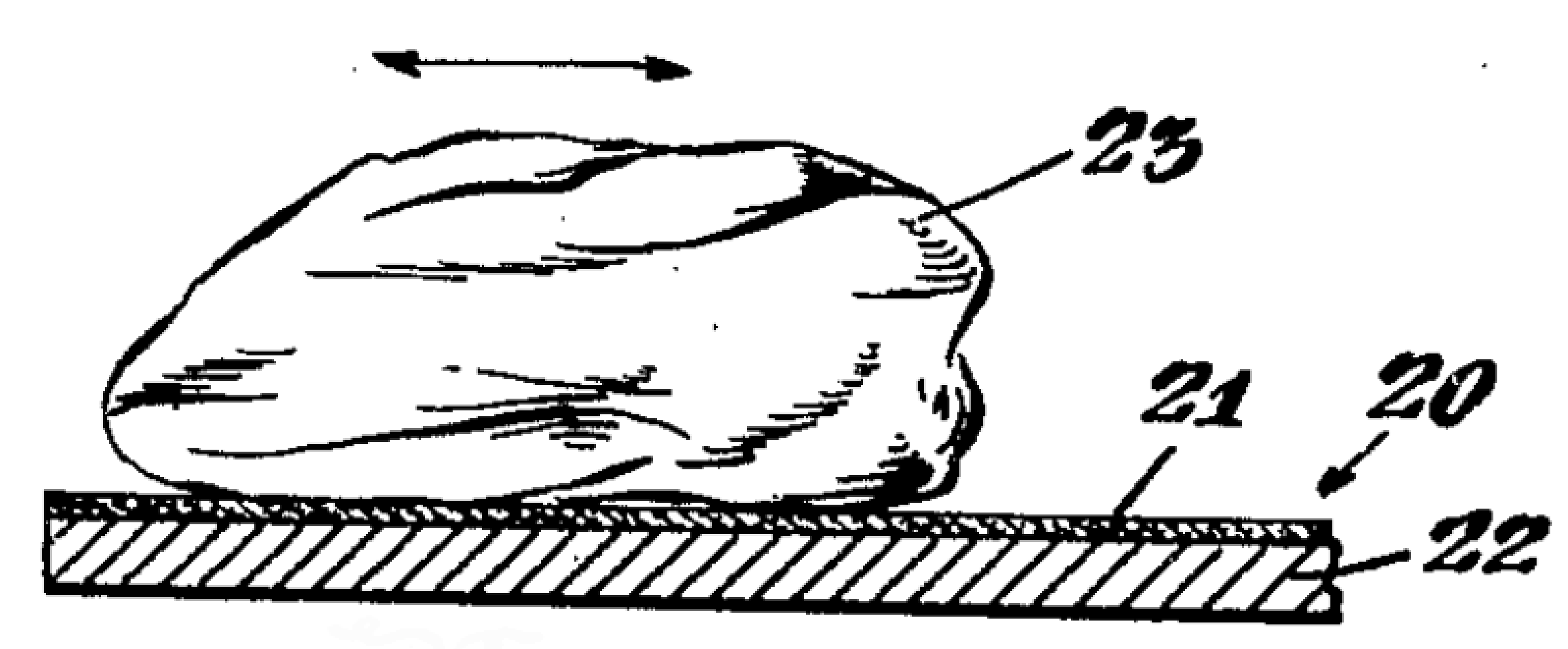 Charging process - tribocharging
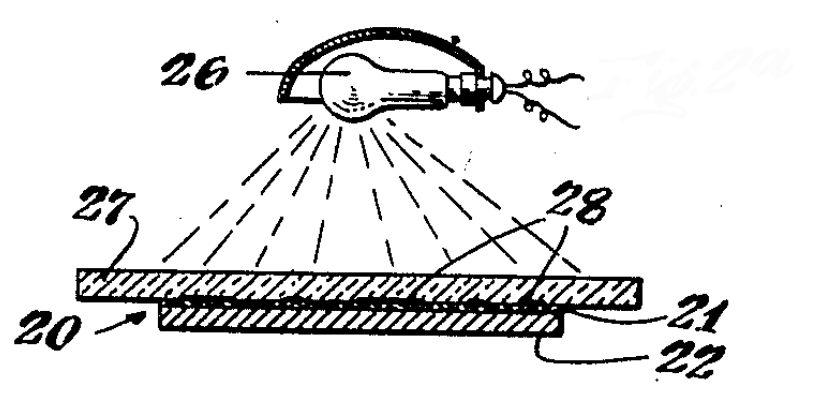 Discharging process - photoconductive effect